The Silent Pandemic: Are We Too Busy to Live?
- neurokarma
- May 28, 2025
- 4 min read
For centuries, humanity has measured catastrophe by the weight of bodies. The Black Death, the 1918 flu—were brutally visible scourges that emptied villages and left an undeniable silence of grief. Today, our cities still hum, our screens still glow, but if you listen closely, you can hear a different kind of siren wailing. It's the silent alarm of a pandemic that doesn't claim lives outright, but stealthily steals our very capacity to live them fully.
This isn't a virus that fills hospital wards with bubonic sores. Instead, it manifests in exhausted bodies, saturated minds, and hearts deeply disconnected. It's the pervasive hum of chronic stress, the gnawing anxiety that steals sleep, and the emotional fatigue that makes joy feel like a distant memory. Look at the stark realities echoing across our society:
In the U.S., suicide rates have hit their highest recorded numbers, climbing even higher in recent years.
Across developed nations, antidepressant use has skyrocketed, with some countries seeing a threefold increase in a decade.
Global projections show a terrifying surge in cancer incidence, with millions of new cases anticipated in the coming decades.
And alarmingly, the prevalence of autism in children continues to rise.
These aren't isolated incidents. They sketch a chilling portrait of an era marked by chronic over-stimulation, environmental stressors, and a profound over-reliance on quick fixes. Where past plagues ended lives, this modern syndrome blunts our ability to inhabit life itself.
The Relentless Sprint: What Have We Traded for "Progress"?
We were sold a dream: progress meant more comfort, more speed, more technology. And yes, we have instant access to food, infinite information, and perfectly regulated climates. But what have we unknowingly traded for this convenience?
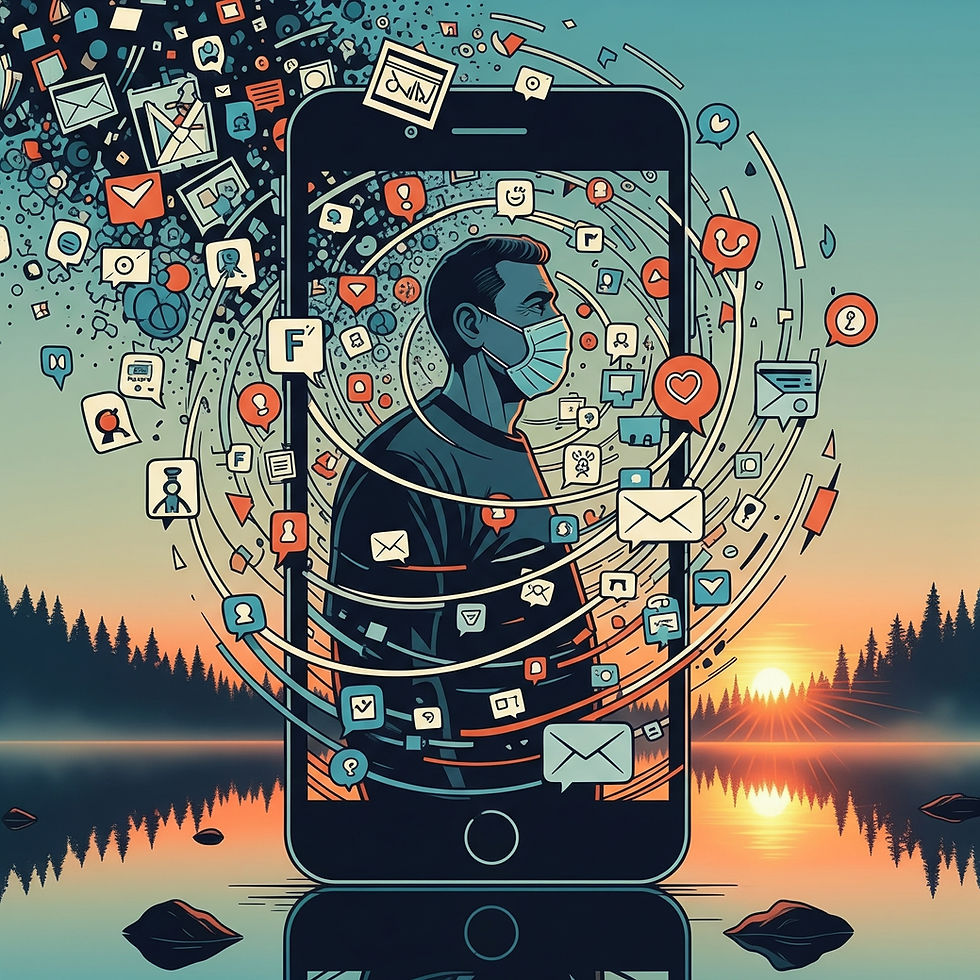
Today, people are dying not of hunger, but of emptiness. We live hyper-stimulated, yet profoundly disconnected from nature, from others, and from ourselves. Anxiety has become a constant companion, deep rest a forgotten luxury. Our attention fragments, and the very soul, often silenced beneath layers of productivity and self-imposed demands, yearns for release.
This relentless pace isn't just external pressure; it's a glorified cult of busyness. Work emails follow us home, 24-hour news cycles keep our nervous systems on high alert, and algorithmic comparison loops fuel a constant sense of inadequacy. Exhaustion has become a status symbol, a perverse badge of honor, while stillness and rest are framed as weakness or laziness. Burnout, once a fringe term, is now a recognized "disease of disengagement," eroding our cognition and empathy long before it forces a sick day.
This ceaseless motion often serves as a form of existential avoidance. If our calendars are packed, there's no room for the unsettling question: "Why am I racing? What am I racing towards?" Busyness becomes both a shield and an anesthetic, dulling the deeper discomfort. Yet, our bodies and minds were never designed for this endless sprint without wide valleys of recovery. Strip out those valleys, and slowly, then all at once, our identities fray, our immunity falters, and our joy goes offline.
Paradoxically, the faster we run, the more we medicate the consequences: stimulants to push through the morning, anxiolytics to quiet the night. We treat the symptoms of our pace, rather than daring to question the pace itself. Is this truly progress if our gains in convenience coincide with record mental health prescriptions and rising self-harm?
The Revolution of Remembering: Our Next Evolution
Past pandemics forced us to confront death. This invisible pandemic forces us to confront life. It asks: "What is a life truly worth living?" If our comfort, our convenience, and our pharmaceutical abundance leave us lonelier, sicker, and more anxious, then we haven't advanced; we've merely rearranged the battlefield.
Evolution doesn't guarantee well-being; natural selection prizes survival and reproduction, not transcendence. But in cultural evolution, we choose our selection pressures. Right now, they favor output over inner flourishing, screen time over human presence, and quick pharmaceutical fixes over profound structural change.
It's time for a different kind of immune response, a collective awakening to what truly matters. We are not just cogs in a machine of endless doing. We are sentient beings with a profound need for silence, for genuine connection, for pause.
What if our true progress lies not in accelerating faster, but in remembering how to inhabit the present? What if the next leap in human evolution is not outward, but inward?
Re-sacralize rest: Let's treat sleep and unstructured leisure as sacred, as vital public infrastructure. Naps can be ecological restoration.
Design for presence: Let's demand cities, workplaces, and digital spaces that prioritize deep focus and authentic interpersonal contact over constant, fragmented reachability.
Measure what matters: If GDP rises while suicide and chronic disease soar, our societal dashboards are broken. Let's track loneliness, play, forest cover, and silent minutes.
Move upstream in medicine: Pills can save lives, but without parallel interventions in lifestyle and community, we're perpetually mopping a flooded floor while the tap stays wide open.
We are at a hinge point. The sky is full of sirens, yes – but sirens are also alarms, designed to wake us. Before we sprint into the next quarter, the next innovation, the next notification, let's pause. Feel the weight of your own breath. Notice the pulse in your wrist. Remember something simple, profound, and utterly revolutionary: to be alive is already enough to justify an unhurried morning.
If we can hold onto that truth—not just think it, but live it—we might just transform this age of silent emergencies into an age of conscious evolution.
What would it look like if we applied the same urgency we once used to quarantine villages to now quarantining our calendars, our apps, our runaway standards? The answer might just determine whether the next century remembers us as a civilization that truly evolved—or one that quietly burned out.
Comments